
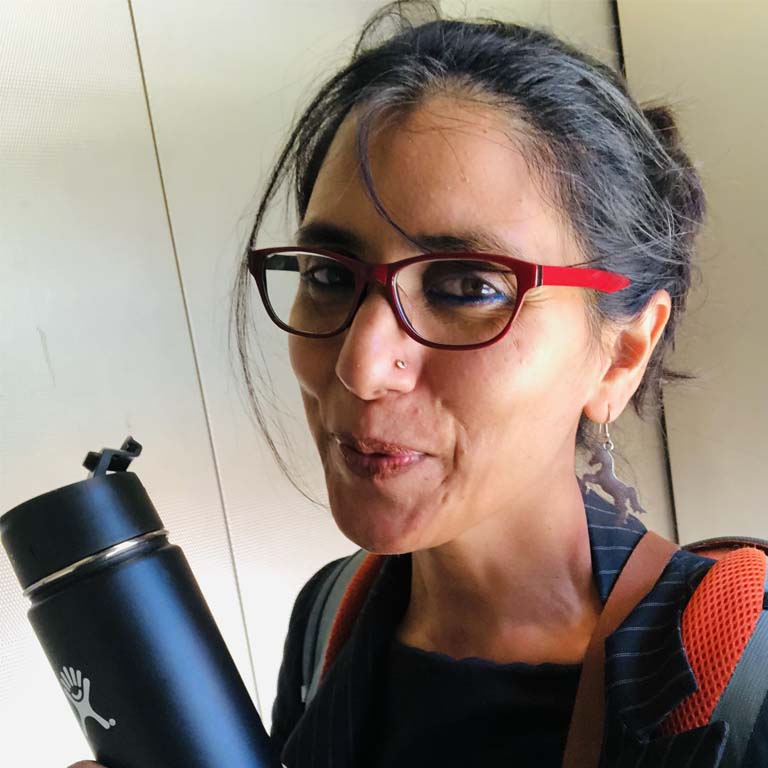
Dr. Sonali Gupta is an anthropological archaeologist, a lawyer, the founding Director of the Himalayan Institute of Cultural and Heritage Studies (HICHS), India and the newly established non profit , Himalayan Conservation and Preservation Society (HCPS) USA, along with Dr. Willeke Wendrich, Neeraj Vir and Dr. Parth Chauhan. HICHS is located in the beautiful and picturesque erstwhile princely state of Dhami, near Simla, Himachal Pradesh. Sonali earned her BA and MA in history from the University of Delhi followed by a law degree. She practiced criminal law for six years after which she gave it all up for the love of archaeology. She completed her Ph.D. in Egyptian Archaeology (and is the first Indian to be an Egyptian archaeologist) from the Cotsen Institute of Archaeology (CIOA) at the University of California, Los Angeles. She simultaneously evolved as a researcher and practitioner of South Asian (Himalayan) and Southeast Asian anthropological archaeology focusing on various aspects of cultural transmission both tangible and intangible.
Dr. Gupta has taught at UCLA, the National Museum Institute, New Delhi, has been the Director of Public Programs for the CIOA. She was also awarded a post-doctoral fellowship at the CIOA where she researched the Iban Textiles of Borneo. Sonali also started the first ever non- invasive archaeological field school in India along with Dr. Parth Chauhan and has since completed six such field schools. Sonali is invested in making HICHS a platform where the academic meets the non-academic and carrying out cutting edge research in and for the Himalayas.
She currently teaches Himalayan centric online courses for both HICHS and HCPS. She seeks to expand and bring in projects for HCPS through grassroots level with the sister organization HICHS.
Dr. Gupta is a TEDx speaker who works closely with grassroots communities across the Himalayas; building on her work with the nonprofit Communitology (https://communitology.co/